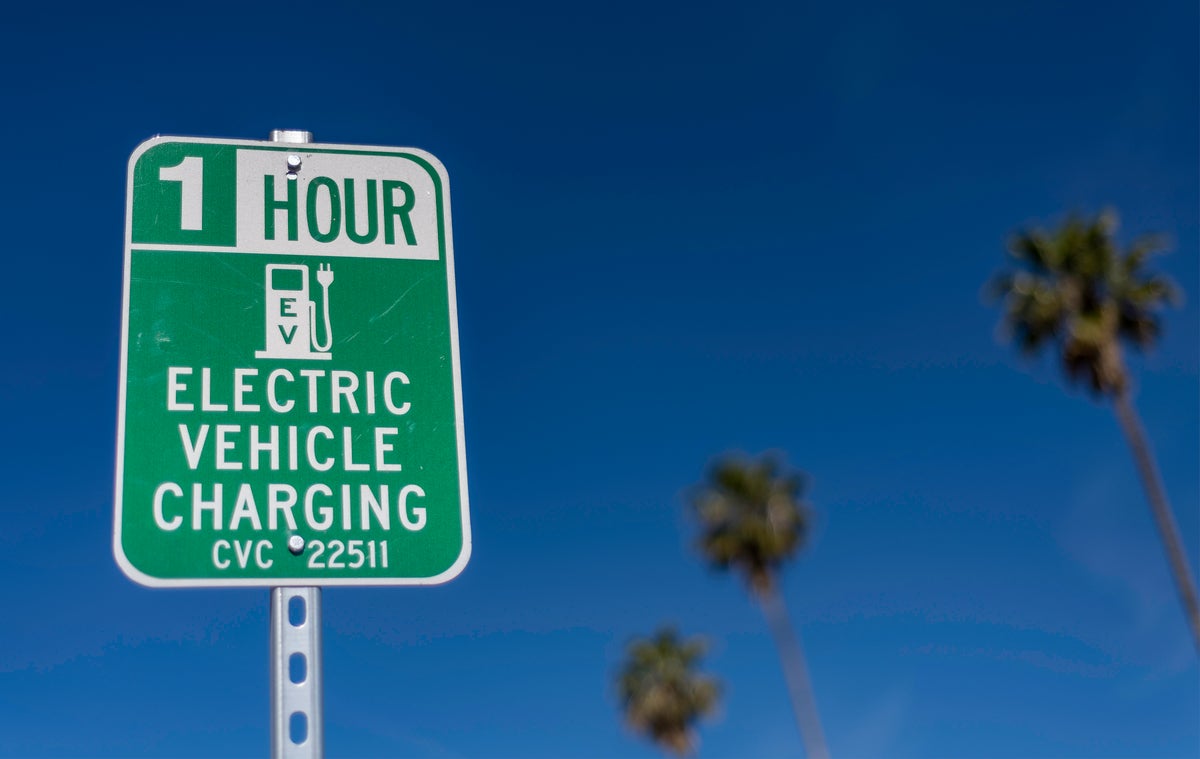
When do you think you will buy a 100% pure electric vehicle?

When will you buy a 100% pure electric vehicle?

  • Already Own One

    Votes: 39 5.5%
  • In the next year

    Votes: 7 1.0%
  • Between 1-5 years

    Votes: 128 18.1%
  • 6-10 years

    Votes: 169 23.9%
  • 10+ years or never

    Votes: 363 51.4%

  • Total voters
    706
Saw a Rivian SUV in DSM today, I thought it definitely looked better than the pickup.

Those eyeballs... I mean headlights tho...
That's a pretty one sided take.

You do understand about 2/3 of oil is domestically sourced.

Also, while you can charge your car at home, where do you think materials to make EV batteries come from?

I have nothing against EV's and believe they have a role in auto industries future. But have my doubts it's a one-size-fits all solution.

And in general, I think governments usually mess things up when they force consumer change.

Did you read what I wrote? I covered the domestic sources of oil. I also covered the fact that the energy from your home can come from different sources.

About the batteries - you're right, the sources of those materials are problematic. That said, how often does a battery need to be replaced versus filling up the tank? A battery is much more comparable to a gas tank than it is a fuel source. They STORE energy, they're not the energy itself. Battery tech is also being actively worked on and is likely to continue to change.

Hmmm.. I don't remember saying anything about governments. I also don't remember being forced to buy an electric car (note: I haven't yet).
 
  • Dumb
Reactions: isucy86
This anticipated argument against EVs is common but doesn't hold water. The grid will adapt to increasing demand.

This is like saying we should continue to rely on ethanol because what else are we going to do with 50% of the corn supply in Iowa? Industry will adapt and change. Or it will die.

But continuing the status quo because of potential consequences to the grid is what got us into this mess.
During the heat waves last year in california EV owners were told limit charging their cars. Do you anticipate heat waves in california stopping? The grid cant keep up there, what do you think will happen when 50,000,000 additional EVs are on the grid?
 
  • Dumb
Reactions: alarson and nrg4isu
I don’t think you are fully thinking things through with that thought.

Please educate me on how cutting domestic production of oil effects the cost of recharging your EV? The only scenario where I see that happening is if your electricity is generated from either natural gas or another oil based method.
 
Sometimes being first to market doesn't mean long term success.

There is a graveyard of first to market companies that no longer exist or no longer make the product. Back in the day IBM, GE and Compac made personal computers.
True, but being last doesn't seem to work well either.
 
During the heat waves last year in california EV owners were told limit charging their cars. Do you anticipate heat waves in california stopping? The grid cant keep up there, what do you think will happen when 50,000,000 additional EVs are on the grid?

You think people actually stopped charging their cars in that situation?
 
The U.S. Produces 4.2 trillion KWh of energy per year, 2.5 trillion of that is fossil fuels. So by 2035 we want half the cars to be EV, so that is 120 million EVs. So if we end fossil fuels and have 120 million EVs by 2035, in the next 12 years we need to add an additional 3 trillion KWh to the grid. What is the plan to do that?
 
  • Dumb
Reactions: alarson
When I looked into PHEVs, I was terribly disappointed. All of the positives were severely curtailed by the negatives. Super short electric only range, still have to carry around all the heavy ICE mechanicals, etc. I liked the idea at first, but the compromises were too severe to make it make sense to me. Either a pure EV or a pure hybrid would be superior for me.

It reminds me of "compromise" aircraft, that try to do 2 things and end up doing neither very well.

I definitely understand your points, but it really depends on usage needs. We love our RAV4 Prime PHEV and haven't filled the gas tank in well over 3k miles. The ~50 mile range covers basically all of our Des Moines metro daily driving, commuting, etc. I think if you had longer daily driving needs it wouldn't be as attractive.

For us it perfectly fits our needs for having a longer range hybrid vehicle for flexibility on road trips, etc. but letting us go electric for most of our driving, a good bridge until we go full EV when trading our other vehicle in a few years.
 
During the heat waves last year in california EV owners were told limit charging their cars. Do you anticipate heat waves in california stopping? The grid cant keep up there, what do you think will happen when 50,000,000 additional EVs are on the grid?

And CA is working on infrastructure improvements to make as a response.

If we add 50M EVs, 1) that clearly won't happen at once and the grid can continue to improve as EVs are added and 2) random, infrequent instances shouldn't be used as an excuse to not buy an EV altogether. Should people not buy internet service because its disrupted 0.1% of the time?
 
The U.S. Produces 4.2 trillion KWh of energy per year, 2.5 trillion of that is fossil fuels. So by 2035 we want half the cars to be EV, so that is 120 million EVs. So if we end fossil fuels and have 120 million EVs by 2035, in the next 12 years we need to add an additional 3 trillion KWh to the grid. What is the plan to do that?


I definitely understand your points, but it really depends on usage needs. We love our RAV4 Prime PHEV and haven't filled the gas tank in well over 3k miles. The ~50 mile range covers basically all of our Des Moines metro daily driving, commuting, etc. I think if you had longer daily driving needs it wouldn't be as attractive.

For us it perfectly fits our needs for having a longer range hybrid vehicle for flexibility on road trips, etc. but letting us go electric for most of our driving, a good bridge until we go full EV when trading our other vehicle in a few years.
Actually, for my daily commute, 25-30 miles would be fine. And then use the hybrid for longer trips. I really wanted to like it and get one.

But my inner engineer just can't tolerate the sub-optimization lol. It felt like wanting tennis shoes to run, and snow boots for winter, and buying hiking boots to do both. Does it work for both? Yes. But not great for either. It's totally a me thing, preference-wise. If I bought one, I'd probably love it :D.
 
  • Like
Reactions: aobie and JH4ISU
The U.S. Produces 4.2 trillion KWh of energy per year, 2.5 trillion of that is fossil fuels. So by 2035 we want half the cars to be EV, so that is 120 million EVs. So if we end fossil fuels and have 120 million EVs by 2035, in the next 12 years we need to add an additional 3 trillion KWh to the grid. What is the plan to do that?
We need to stop using EVs as an excuse to not upgrade our power generation. We need to do that regardless, EVs just speed up the need. We're never going to need less power. It's time to modernize.
 
Please educate me on how cutting domestic production of oil effects the cost of recharging your EV? The only scenario where I see that happening is if your electricity is generated from either natural gas or another oil based method.
43% of electricity is from gas (which a large part is aligned with oil collection) and oil itself. We are talking a very inelastic industry so cutting any part of that will jack up the cost of electricity. Will also jack up the costs of the solar panels and wind turbines or any other green type thing you plan to use.

You apparently seem understand it but dont want to accept it according to what I replied to.
 
  • Informative
  • Like
Reactions: NWICY and nrg4isu
I'm of the belief to let people drive what they want and in the end, people will make the choice that's best for them. If you want to buy a jeep CJ so you can take off the doors and show the world your crocs, go ahead. If you just want to buy a Toyota Camry and run it in to the ground until you die, go ahead.

I remember living in small town Iowa in the 80's and getting crap for driving an import. It was the big 3 or nothing else. You go through that same town today and the nicest cars in town are imports. The Honda's are more American than most of the vehicles from the Big 3.

We're not buying the Tesla because I love/hate Elon, trying to save the planet, planning on saving a lot in fuel costs. etc. We were looking at a small $40k SUV for my wife to compliment my larger Kia Telluride and with all of the discounts it made sense to me. Being a car guy, I'm a little worried about fit/finish but I love the simple interior design and the power of that electric motor is breathtaking. I've had plenty of sports cars and muscle cars in my life and there is nothing like the kick of that electric motor. We'll see how it works out for us.

My guess is that it will be a steady roll of more and more people buying EV's and once you have one, people probably won't go back. Companies like GM are building their whole brand around EV's and I don't see them retreating.
 
I'm of the belief to let people drive what they want and in the end, people will make the choice that's best for them. If you want to buy a jeep CJ so you can take off the doors and show the world your crocs, go ahead. If you just want to buy a Toyota Camry and run it in to the ground until you die, go ahead.

I remember living in small town Iowa in the 80's and getting crap for driving an import. It was the big 3 or nothing else. You go through that same town today and the nicest cars in town are imports. The Honda's are more American than most of the vehicles from the Big 3.

We're not buying the Tesla because I love/hate Elon, trying to save the planet, planning on saving a lot in fuel costs. etc. We were looking at a small $40k SUV for my wife to compliment my larger Kia Telluride and with all of the discounts it made sense to me. Being a car guy, I'm a little worried about fit/finish but I love the simple interior design and the power of that electric motor is breathtaking. I've had plenty of sports cars and muscle cars in my life and there is nothing like the kick of that electric motor. We'll see how it works out for us.

My guess is that it will be a steady roll of more and more people buying EV's and once you have one, people probably won't go back. Companies like GM are building their whole brand around EV's and I don't see them retreating.
It's going to be a steady progression as EV prices come down, charging infrastructure gets built out nationwide, and batteries charge quicker and have longer range. They've already made massive strides in all these areas in the past 10 years, and with all the automakers more or less on board, it's not going to slow down.

Several larger states have already mandated 2035 (WA, NY, CA and a few others, IIRC) as the year where all new cars sold in-state have to be EVs. I'd think automakers would have that year picked as when a large majority of their sales will be EVs.
 
  • Agree
Reactions: nrg4isu
43% of electricity is from gas (which a large part is aligned with oil collection) and oil itself. We are talking a very inelastic industry so cutting any part of that will jack up the cost of electricity. Will also jack up the costs of the solar panels and wind turbines or any other green type thing you plan to use.

You apparently seem understand it but dont want to accept it according to what I replied to.

Or I'm just not informed. I can admit that. I'm honestly surprised about that 43% number, but it does appear to be pretty close if not exactly right (source). I would have guessed it would have been closer to 10-15% with coal being a lot higher.

Another question, that I honestly don't have an answer to. Do electrical rates actually fluctuate that much? When I get my electrical bill, I've never noticed rate changes. It's quite possible it's because I've never looked closely. (juxtaposed to gas prices, which we all see changing daily/weekly) As far as I know, my electrical rates have been very steady over the past 10-15 years.
 
  • Like
Reactions: BCClone
I'm of the belief to let people drive what they want and in the end, people will make the choice that's best for them. If you want to buy a jeep CJ so you can take off the doors and show the world your crocs, go ahead. If you just want to buy a Toyota Camry and run it in to the ground until you die, go ahead.

I remember living in small town Iowa in the 80's and getting crap for driving an import. It was the big 3 or nothing else. You go through that same town today and the nicest cars in town are imports. The Honda's are more American than most of the vehicles from the Big 3.

We're not buying the Tesla because I love/hate Elon, trying to save the planet, planning on saving a lot in fuel costs. etc. We were looking at a small $40k SUV for my wife to compliment my larger Kia Telluride and with all of the discounts it made sense to me. Being a car guy, I'm a little worried about fit/finish but I love the simple interior design and the power of that electric motor is breathtaking. I've had plenty of sports cars and muscle cars in my life and there is nothing like the kick of that electric motor. We'll see how it works out for us.

My guess is that it will be a steady roll of more and more people buying EV's and once you have one, people probably won't go back. Companies like GM are building their whole brand around EV's and I don't see them retreating.
I agree with most of what you wrote. Let the market/consumers dictate demand and businesses will develop product to meet that demand.

It would not surprise me to see GM or Ford in financial trouble because they have put all their investment around EV's and the needed volume to be profitable might not come soon enough. And it's not like Ford/GM's EV investment has focused on vehicles for the masses. I fear we will see bailouts similar to 70's (oil prices) or 00's (financial crisis) within the US auto industry.
 
I definitely understand your points, but it really depends on usage needs. We love our RAV4 Prime PHEV and haven't filled the gas tank in well over 3k miles. The ~50 mile range covers basically all of our Des Moines metro daily driving, commuting, etc. I think if you had longer daily driving needs it wouldn't be as attractive.

For us it perfectly fits our needs for having a longer range hybrid vehicle for flexibility on road trips, etc. but letting us go electric for most of our driving, a good bridge until we go full EV when trading our other vehicle in a few years.
This is where I’m at. Definitely gonna dip my toe in with hybrid. All electric doesn’t suit my needs and it might not for years yet.
 
  • Like
  • Agree
Reactions: JP4CY and JH4ISU

Help Support Us

Become a patron