Woodworkers Thread

If that’s the case, this one would do really well but Bosch, Makita, Metabo and Rigid make some good saws too at certain price points. Don’t get a slider if you don’t think you’ll need it. They’re a lot more of a pain to store and they’re heavy (plus more money).

Some sliders now, including brands you mentioned don’t have the bars go back and instead are fixed going forwards. So the actual saw slides on them vs the bars sliding backwards.
 
Some sliders now, including brands you mentioned don’t have the bars go back and instead are fixed going forwards. So the actual saw slides on them vs the bars sliding backwards.

True. I was just assuming $650+ was a little much. I’m not sure I’ve seen one for less than that.
 
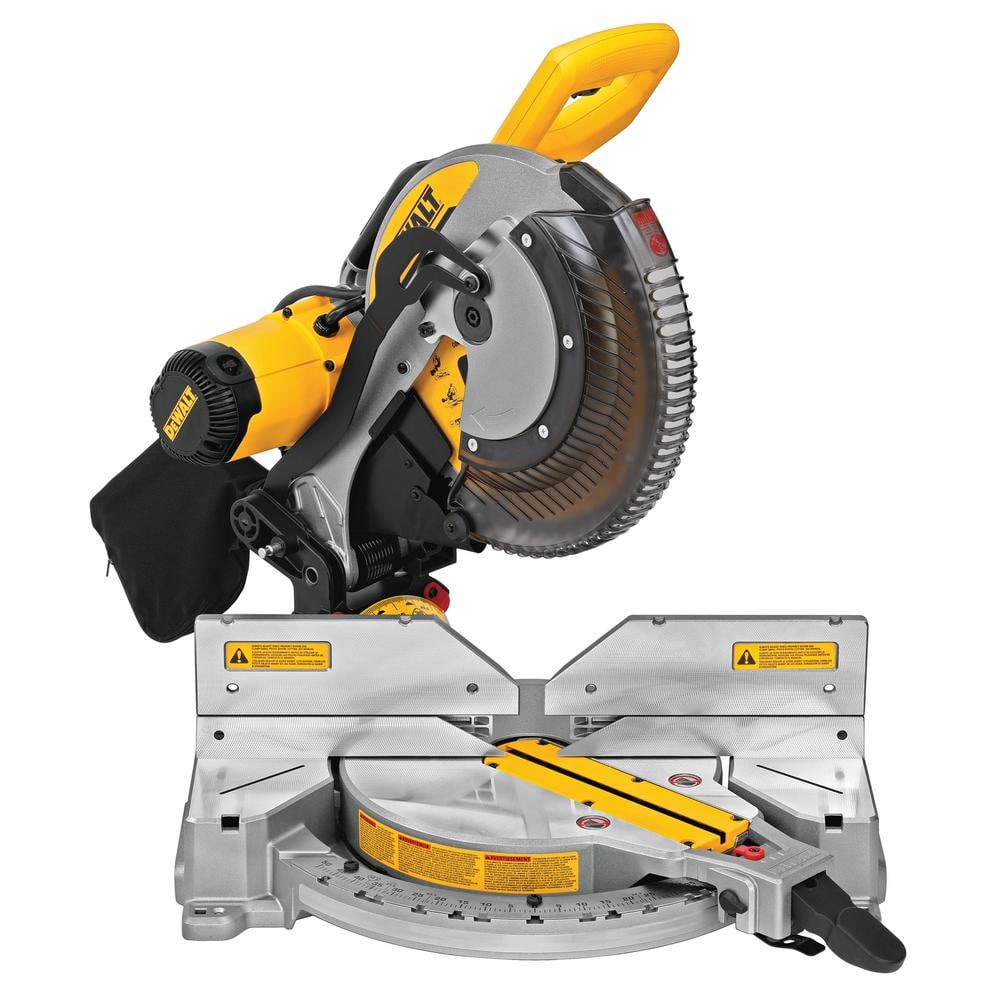
what’s the best way to get a good baseboard miter-cut? I have a decent hand saw and a miter box (which is too short for our 4-5/8” baseboard). First time was a failure as I could get it to line up well without sanding and cutting more out until I had took too much off and the other end was too short.
Is the solution just a good compound miter saw?

I think the easiest way is definitely a power miter saw. Probably doesn't need to be anything real fancy.

If you have a table saw you may be able to tilt the blade and use the miter gauge to hold the baseboard perpendicular, but if you're cutting anything very long it's going to be a pain to feed straight.

Another option would be to build a jig/ crosscut table to use with a circular saw--again setting 45 using tilt on the saw, but moving the saw instead of the wood. If your time to build a jig is worth much you'd still be better off buying a cheap miter saw (or find a friend you can borrow one from).

You may already know this, but if you have trouble getting a tight fit on outer corners, try cutting a degree or two under 45. And/or back cut the inside with a hand saw after making the miter cut. This will help get a tight joint on the face of the trim, and it generally doesn't matter if there's a little gap on the back side where you can't see it. Walls in residential construction are rarely perfect 90s anyway, in my experience.
 
Finished up my most recent project over the weekend: shop storage/cabinets. Built these all from a stack of plywood and pine. Even made the drawer slides out of oak. We moved to a new place last year and while it has an enormous third stall that makes for an amazing woodshop, it had no storage. Between this and the pegboard, I am much, much more organized and efficient. They are far from perfect, but they are functional. I also now have a huge respect for cabinet builders!

Shop Cabinets.jpg
 
Finished up my most recent project over the weekend: shop storage/cabinets. Built these all from a stack of plywood and pine. Even made the drawer slides out of oak. We moved to a new place last year and while it has an enormous third stall that makes for an amazing woodshop, it had no storage. Between this and the pegboard, I am much, much more organized and efficient. They are far from perfect, but they are functional. I also now have a huge respect for cabinet builders!

View attachment 81444
Looks nice, cabinets will definitely test your skill and patience. Are each half 4 individual cabinets?
 
  • Like
Reactions: throwittoblythe
Finished up my most recent project over the weekend: shop storage/cabinets. Built these all from a stack of plywood and pine. Even made the drawer slides out of oak. We moved to a new place last year and while it has an enormous third stall that makes for an amazing woodshop, it had no storage. Between this and the pegboard, I am much, much more organized and efficient. They are far from perfect, but they are functional. I also now have a huge respect for cabinet builders!

View attachment 81444
All that work and you can’t even hang that pennant straight.... shame. ;)


looks awesome!
 
Looks nice, cabinets will definitely test your skill and patience. Are each half 3 individual cabinets?

I definitely learned why cabinet making requires such precision. If you're off a 1/4" here or a 1/2" there, man, it screws up lots of stuff down the line.

Each cabinet is four bays. I made them all as one single unit. So, I have the two end caps, then three divider walls, all connected with horizontal boards (stringers) built into the body. The ends are each open cabinets, while the other bays have three drawers. The bottom of each of the super wide drawer bays actually flips down and is storage for stuff I rarely ever use.

The tops are two layers of 3/4" MDF with red oak trim for durability.
 
  • Like
Reactions: CloneFan96
Help me cyclone fanatic, you're my only hope!

As we plan out our new home build, my fiancé really wants me to make a new kitchen table. I love the challenge and it's a great excuse to potentially buy new tools (and expand my knowledge) that she would approve of! I built a nice little table for our deck last year and she loved it and didn't realize I loved projects like this and is in full support. I definitely want to take advantage of that situation!

Anyway, my eyes have been draw to some local sources of black walnut as the wood for the table top. I really like the color/pattern and think it could make a great finish. My concern of course is turning live edge slabs into straight edge planks.

My thoughts were a couple of options. I could use a straight edge like angle iron and clamp it to the slab. I could then use the straight edge to make a final cut with my circular saw. OR, I could do a pass with the circular saw and then use the guide with a router flush trim bit.

What are your thoughts/experiences with something like that? Suggestions on which direction to go or even a third option I'm not thinking of?

I have your basic tools; table saw, compound miter saw, router, clamps (need a lot more of these though, bar clamps seem to be the way to go), etc.

The other question is dowels vs biscuits?

I've done plenty of "rough" grade projects but this will be my first "furniture" grade attempt. We definitely want more of the farm table look which is good as it gives me some room to learn but I am a perfectionist and thankfully am blessed with a ridiculous amount of patience for this type of work.

Thanks!
 
Help me cyclone fanatic, you're my only hope!

As we plan out our new home build, my fiancé really wants me to make a new kitchen table. I love the challenge and it's a great excuse to potentially buy new tools (and expand my knowledge) that she would approve of! I built a nice little table for our deck last year and she loved it and didn't realize I loved projects like this and is in full support. I definitely want to take advantage of that situation!

Anyway, my eyes have been draw to some local sources of black walnut as the wood for the table top. I really like the color/pattern and think it could make a great finish. My concern of course is turning live edge slabs into straight edge planks.

My thoughts were a couple of options. I could use a straight edge like angle iron and clamp it to the slab. I could then use the straight edge to make a final cut with my circular saw. OR, I could do a pass with the circular saw and then use the guide with a router flush trim bit.

What are your thoughts/experiences with something like that? Suggestions on which direction to go or even a third option I'm not thinking of?

I have your basic tools; table saw, compound miter saw, router, clamps (need a lot more of these though, bar clamps seem to be the way to go), etc.

The other question is dowels vs biscuits?

I've done plenty of "rough" grade projects but this will be my first "furniture" grade attempt. We definitely want more of the farm table look which is good as it gives me some room to learn but I am a perfectionist and thankfully am blessed with a ridiculous amount of patience for this type of work.

Thanks!
Sounds like you've just earned yourself a track saw.
I would do biscuits but if I had the money, domino if I planned to do more.
 
Help me cyclone fanatic, you're my only hope!

As we plan out our new home build, my fiancé really wants me to make a new kitchen table. I love the challenge and it's a great excuse to potentially buy new tools (and expand my knowledge) that she would approve of! I built a nice little table for our deck last year and she loved it and didn't realize I loved projects like this and is in full support. I definitely want to take advantage of that situation!

Anyway, my eyes have been draw to some local sources of black walnut as the wood for the table top. I really like the color/pattern and think it could make a great finish. My concern of course is turning live edge slabs into straight edge planks.

My thoughts were a couple of options. I could use a straight edge like angle iron and clamp it to the slab. I could then use the straight edge to make a final cut with my circular saw. OR, I could do a pass with the circular saw and then use the guide with a router flush trim bit.

What are your thoughts/experiences with something like that? Suggestions on which direction to go or even a third option I'm not thinking of?

I have your basic tools; table saw, compound miter saw, router, clamps (need a lot more of these though, bar clamps seem to be the way to go), etc.

The other question is dowels vs biscuits?

I've done plenty of "rough" grade projects but this will be my first "furniture" grade attempt. We definitely want more of the farm table look which is good as it gives me some room to learn but I am a perfectionist and thankfully am blessed with a ridiculous amount of patience for this type of work.

Thanks!
I just did this (still need to sand it one more time and finish).

ED1C7ED8-8E82-4E7B-BE01-9A4B14BF5851.jpeg15D9E286-B014-4D78-9949-54F6C1E49912.jpeg

I have a kreg jig and used that to joint the top joints. I planned to glue it and use a biscuit joiner as well but the table saw I borrowed from a buddy didn’t cut it very straight and I am pretty sure the glue would of ended up showing some in some of the tiny gaps. I think it will hold just fine. There’s about 50 lag screws in the bottom side of it. I am not tracking exactly what your doing but do you have access to a decent table saw? That seems like it would save you a lot of time and hassle to make
I just did this (still need to sand it one more time and finish). I have a kreg jig HD and used that to joint the top joints. I planned to glue it and use a biscuit joiner as well but my table saw didn’t cut it very straight and I am pretty sure the glue would of ended up showing some in some of the tiny gaps. I think it will hold just fine. There’s about 40 lag screws in the bottom side of it. I am not tracking exactly what your doing but do you have access to a decent table saw? That seems like it would save you a lot of time and has
 
Help me cyclone fanatic, you're my only hope!

As we plan out our new home build, my fiancé really wants me to make a new kitchen table. I love the challenge and it's a great excuse to potentially buy new tools (and expand my knowledge) that she would approve of! I built a nice little table for our deck last year and she loved it and didn't realize I loved projects like this and is in full support. I definitely want to take advantage of that situation!

Anyway, my eyes have been draw to some local sources of black walnut as the wood for the table top. I really like the color/pattern and think it could make a great finish. My concern of course is turning live edge slabs into straight edge planks.

My thoughts were a couple of options. I could use a straight edge like angle iron and clamp it to the slab. I could then use the straight edge to make a final cut with my circular saw. OR, I could do a pass with the circular saw and then use the guide with a router flush trim bit.

What are your thoughts/experiences with something like that? Suggestions on which direction to go or even a third option I'm not thinking of?

I have your basic tools; table saw, compound miter saw, router, clamps (need a lot more of these though, bar clamps seem to be the way to go), etc.

The other question is dowels vs biscuits?

I've done plenty of "rough" grade projects but this will be my first "furniture" grade attempt. We definitely want more of the farm table look which is good as it gives me some room to learn but I am a perfectionist and thankfully am blessed with a ridiculous amount of patience for this type of work.

Thanks!

For cutting down a table top, both of those options work. You can also use a track saw. I’ve had better luck finishing it off with a flush trim bit on the router with a straight edge. Are the boards S2S and how thick of material do you plan on using?

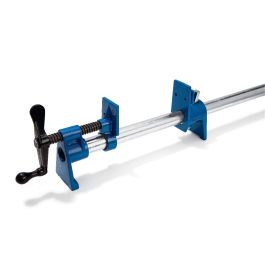
A cheap way to get bar clamps is buying these below and then picking up some pipe locally. I like the wide feet on the Rockler clamps. They’re on sale really frequently. I bought mine for 15 a piece and if you sign up on their website you get free shipping over 35 bucks. I use mine all the time and have had zero issues going this route.

 
Help me cyclone fanatic, you're my only hope!

As we plan out our new home build, my fiancé really wants me to make a new kitchen table. I love the challenge and it's a great excuse to potentially buy new tools (and expand my knowledge) that she would approve of! I built a nice little table for our deck last year and she loved it and didn't realize I loved projects like this and is in full support. I definitely want to take advantage of that situation!

Anyway, my eyes have been draw to some local sources of black walnut as the wood for the table top. I really like the color/pattern and think it could make a great finish. My concern of course is turning live edge slabs into straight edge planks.

My thoughts were a couple of options. I could use a straight edge like angle iron and clamp it to the slab. I could then use the straight edge to make a final cut with my circular saw. OR, I could do a pass with the circular saw and then use the guide with a router flush trim bit.

What are your thoughts/experiences with something like that? Suggestions on which direction to go or even a third option I'm not thinking of?

I have your basic tools; table saw, compound miter saw, router, clamps (need a lot more of these though, bar clamps seem to be the way to go), etc.

The other question is dowels vs biscuits?

I've done plenty of "rough" grade projects but this will be my first "furniture" grade attempt. We definitely want more of the farm table look which is good as it gives me some room to learn but I am a perfectionist and thankfully am blessed with a ridiculous amount of patience for this type of work.

Thanks!

One tool to consider would be a track saw. They are kind of pricey, but if you think you'll need to cut down slabs or break down sheet goods, these are pretty slick. I got one to build the cabinets I posted above and it made cutting straight/accurate on 4x8 plywood a breeze. Note the price below doesn't include the cost of the track. You're probably looking at $500-$600 all-in for a track saw plus track. Alternatively, Kreg does make a "track jig" that you can attached to a circular saw. Never worked with it so can't comment on how good/bad it is.

If this isn't the kind of cut you'll need to do on a regular basis, a nice straight edge clamped to the stock like you said will do the trick with a circular saw. There are even some nice videos of people doing DIY tracks for their circular saw on YT. The nice thing about the tracks or that Kreg jig, is they control play in both directions. If you use a straight edge on one side, you can wander off the line and ruin the cut. Of course you could just use two straight edges for a quick "guide" as well.

Dewalt Track Saw

Kreg Accu-Cut

Dowels vs. biscuits: The biggest misconception with biscuits is that they add strength. They do little for strength, they are purely for alignment. That being said, they can make glue-up a breeze when done properly. Dowels provide the same alignment, but also add some strength. An alternative here would be something like the MLCS glue joint system linked below. I used that for a bench seat. While it takes some time to dial it in, it makes glue up really easy once you get it set.

MLCS Glue Joint

Finally, if you're going with a walnut table that means you're spending a nice penny on wood. So, take the time to do some research on building a table top. If you just glue it all tight together, the wood may split over the years. There are steps to follow for table tops to allow the wood to expand/contract with the seasons without splitting.

 
Alternatively, Kreg does make a "track jig" that you can attached to a circular saw. Never worked with it so can't comment on how good/bad it is.
From my experience that's great for ripping when you don't need true precision. The "fence" can move on you a little bit against your wood edge.
 
  • Informative
Reactions: throwittoblythe
From my experience that's great for ripping when you don't need true precision. The "fence" can move on you a little bit against your wood edge.

Good to know. I had the kreg rip-cut jig and had the same problem, personally. Just too much play in those plastic parts to make it effective. I didn't want to raise the same concern about the accu-cut without having used it.
 
Good to know. I had the kreg rip-cut jig and had the same problem, personally. Just too much play in those plastic parts to make it effective. I didn't want to raise the same concern about the accu-cut without having used it.
I'd buy name brand for track saws. Honestly Festool stuff if pricey by and large but I think their track saw isn't as high priced as other products. Makita and Dewalt are great too.
 
  • Like
Reactions: throwittoblythe
I'd buy name brand for track saws. Honestly Festool stuff if pricey by and large but I think their track saw isn't as high priced as other products. Makita and Dewalt are great too.

Agree. I've got the dewalt cordless track saw and I love it. Before I could afford such a tool, I had to use that Kreg rip-cut and I hated it. I made some built-ins with that thing and it made some gnarly curvy cuts on an 8 ft long sheet. Breaking down sheets with that Dewalt is a dream. Measure, set the track, cut straight and true. 180 degrees from that Kreg jig.
 
Agree. I've got the dewalt cordless track saw and I love it. Before I could afford such a tool, I had to use that Kreg rip-cut and I hated it. I made some built-ins with that thing and it made some gnarly curvy cuts on an 8 ft long sheet. Breaking down sheets with that Dewalt is a dream. Measure, set the track, cut straight and true. 180 degrees from that Kreg jig.
The nice thing about the Dewalt and Makitas are you can usually reuse that track for a router with a bolt on guide as well.
 
  • Informative
Reactions: throwittoblythe
I just did this (still need to sand it one more time and finish).

View attachment 81469View attachment 81468

I have a kreg jig and used that to joint the top joints. I planned to glue it and use a biscuit joiner as well but the table saw I borrowed from a buddy didn’t cut it very straight and I am pretty sure the glue would of ended up showing some in some of the tiny gaps. I think it will hold just fine. There’s about 50 lag screws in the bottom side of it. I am not tracking exactly what your doing but do you have access to a decent table saw? That seems like it would save you a lot of time and hassle to make
I just did this (still need to sand it one more time and finish). I have a kreg jig HD and used that to joint the top joints. I planned to glue it and use a biscuit joiner as well but my table saw didn’t cut it very straight and I am pretty sure the glue would of ended up showing some in some of the tiny gaps. I think it will hold just fine. There’s about 40 lag screws in the bottom side of it. I am not tracking exactly what your doing but do you have access to a decent table saw? That seems like it would save you a lot of time and has

Yup I'm looking at something similar. I had some of the same fears in regards to gaps etc. I had contemplated doing an epoxy/life edge build but the lady doesn't like that look at all.

For cutting down a table top, both of those options work. You can also use a track saw. I’ve had better luck finishing it off with a flush trim bit on the router with a straight edge. Are the boards S2S and how thick of material do you plan on using?

A cheap way to get bar clamps is buying these below and then picking up some pipe locally. I like the wide feet on the Rockler clamps. They’re on sale really frequently. I bought mine for 15 a piece and if you sign up on their website you get free shipping over 35 bucks. I use mine all the time and have had zero issues going this route.


The slabs I've found are S2S. I think I may have actually gotten that trim bit idea from one of your posts now that I think of it! I don't have formal plans yet but would likely be around 1.5" for the table top. I've seen the bar clamps and was eying some from Harbor Freight. But if Rockler are on sale often then I'd lean on going that route.

One tool to consider would be a track saw. They are kind of pricey, but if you think you'll need to cut down slabs or break down sheet goods, these are pretty slick. I got one to build the cabinets I posted above and it made cutting straight/accurate on 4x8 plywood a breeze. Note the price below doesn't include the cost of the track. You're probably looking at $500-$600 all-in for a track saw plus track. Alternatively, Kreg does make a "track jig" that you can attached to a circular saw. Never worked with it so can't comment on how good/bad it is.

If this isn't the kind of cut you'll need to do on a regular basis, a nice straight edge clamped to the stock like you said will do the trick with a circular saw. There are even some nice videos of people doing DIY tracks for their circular saw on YT. The nice thing about the tracks or that Kreg jig, is they control play in both directions. If you use a straight edge on one side, you can wander off the line and ruin the cut. Of course you could just use two straight edges for a quick "guide" as well.

Dewalt Track Saw

Kreg Accu-Cut

Dowels vs. biscuits: The biggest misconception with biscuits is that they add strength. They do little for strength, they are purely for alignment. That being said, they can make glue-up a breeze when done properly. Dowels provide the same alignment, but also add some strength. An alternative here would be something like the MLCS glue joint system linked below. I used that for a bench seat. While it takes some time to dial it in, it makes glue up really easy once you get it set.

MLCS Glue Joint

Finally, if you're going with a walnut table that means you're spending a nice penny on wood. So, take the time to do some research on building a table top. If you just glue it all tight together, the wood may split over the years. There are steps to follow for table tops to allow the wood to expand/contract with the seasons without splitting.


Thank you! Those are some great ideas. I haven't had the need to make many of these cuts in the past and just don't know what I'll be making in the future that I couldn't do on a table saw. As you mentioned though, long cuts on sheets would be great though. I hadn't thought of that, especially if I'm building shelving.

I'm too nervous about messing up what will be an expensive amount of wood. My plan is to do a small mock up before hand to practice/test the steps needed before I dive into the big boards. I want to practice all the cuts, assembly, finish, etc.

As for future projects I have to make an arbor for our wedding, custom desk for home office, pergola over the patio, then eventually finish the basement. I love the idea of being able to custom build the shelving/cabinets for the basement as I go.
 
My concern of course is turning live edge slabs into straight edge planks.

My thoughts were a couple of options. I could use a straight edge like angle iron and clamp it to the slab. I could then use the straight edge to make a final cut with my circular saw. OR, I could do a pass with the circular saw and then use the guide with a router flush trim bit.

The other question is dowels vs biscuits?

If I were going to the work and expense of building a nice, large, table out of walnut, I would REALLY want to run the boards being glued together for the top through a jointer. Perhaps I'm underestimating the performance of newer track saw setups, but I just can't see it being precise enough to get a tight glue joint over a kitchen table length when you're raking small blade teeth vertically across the glue surface. You need those joints to be perfectly 90 so the top is flat, and perfectly straight over the full length so you don't have gaps.

If a jointer isn't in the cards, I think a router would give you a better chance of success than a circular saw. The only way I see a circular saw / track saw being maybe good enough is if you clamp boards down to a flat surface side-by-side and make the final cut down the joint, so you're cutting both sides of the joint at the same time and there is some hope that imperfections cancel out.

IMO, for edge gluing something like a table top biscuits are way better than dowels. Far far faster, and very precise vertically to help with alignment of the joint so the top ends up flat (while having some wiggle room horizontally so small inaccuracies that way don't create big problems). Where dowels are useful is creating strong corner joints (like between horizontal stringers and legs) without the hassle of mortise and tenons. The domino machines look awesome if you have money to burn.
 

Help Support Us

Become a patron