
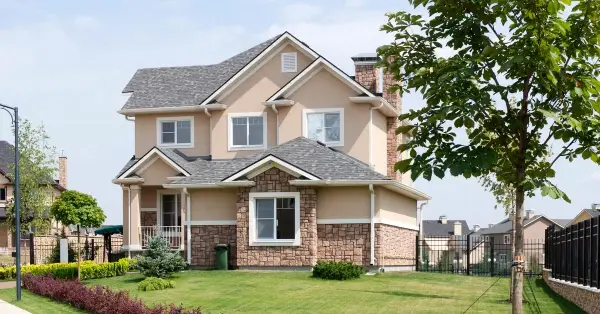
Worth repeating. This 100% Now add in all the high end pieces that we can't possibly live without (granite, hard wood floors, high end appliances, etc)I would counter that the huge difference in housing generation to generation is the houses themselves. I have a 1750 square foot home. My parents never owned one this large. Many homes from my parents generations were 700-1000 and a few much smaller. Many had single car, unattached garages, not 3 car attached. Lots were enough to fit the house, not 1/3 to 1/2 acre lots.
I don’t think I’ve seen a house under 1500 square feet built in the town I live in since we moved here nearly 20 years ago. Houses are much different.


No forums found...
Site Related
Iowa State
College Sports
General - Non ISU
CF Archive
Install the app
How to install the app on iOS
Follow along with the video below to see how to install our site as a web app on your home screen.
Note: This feature may not be available in some browsers.
Housing market
- Thread starter simply1
- Start date
No forums found...
Site Related
Iowa State
College Sports
General - Non ISU
CF Archive
You are using an out of date browser. It may not display this or other websites correctly.
You should upgrade or use an alternative browser.
You should upgrade or use an alternative browser.


Worth repeating. This 100% Now add in all the high end pieces that we can't possibly live without (granite, hard wood floors, high end appliances, etc)
My grandpa raised 6 kids in a converted one car garage! We don't need no high end appliances!

It was. I remember it vaguely, through my parents as I was young at the time. What the chart shows is, is that sub7% is abnormal for most of history. Current borrowers have had a HUGE advantage over previous generations
Very much negated by asset appreciation.
Parents were fortunate enough to be able to pick up some $600 land in the 1980s due to rates. And 125k house at 7%+.
It all evens out in end.
In current situation (fairly asset poor and cash heavy), would welcome high rates in short term to pick up some reasonable ground/rentals if liquidated.

Oh, I understand and agree. Land is easier to compare. Houses are more difficult due to the reasons I mentioned, no one is building the 4 room, 2 bedroom houses anymore. My sons apartment is that size. You can’t really compare a 720 square foot home to a 1600 square foot home.Very much negated by asset appreciation.
Parents were fortunate enough to be able to pick up some $600 land in the 1980s due to rates. And 125k house at 7%+.
It all evens out in end.
In current situation (fairly asset poor and cash heavy), would welcome high rates in short term to pick up some reasonable ground/rentals if liquidated.
Built a home in 1980. The local banks wanted 15% and up. Found a private lender for much less (but still high compared to today's rate). The good news was the value of the home was 1980's value so the principle was much less than now. However, wages were also at 1980 rates.....This is still the funniest chart on the Internet.
View attachment 103646
That must have been ******* awful.
Had that private loan for about 8 years until the rates came back to earth.
You are correct, it sucked.

Don’t worry
 www.lendingtree.com
What Is a 40-Year Mortgage and How To Get One?
A 40-year mortgage can help lower your monthly mortgage payments, but there are tradeoffs. Learn more about a 40-year loan and whether it's right for you.

I’ll take stupidest things you could do for $600, Alex.Don’t worry
What Is a 40-Year Mortgage and How To Get One?
A 40-year mortgage can help lower your monthly mortgage payments, but there are tradeoffs. Learn more about a 40-year loan and whether it's right for you.


Going to happen more and more. 30 was once crazy and look at what has happened with car loans!I’ll take stupidest things you could do for $600, Alex.

The higher interest rates are felt much more in states like Iowa, due to the insane cost of property taxes (1.5%). If you live in a state like TN or AL, for instance, you're paying around 0.4% of assessed value. So, buying now with the highest interest rates is more easily digested because within a few years, you'll very likely be able to refinance for a much lower APR. Personally, I've very heavily considered moving to TN for not only this reason, but because of the absence of state income taxes. It's insane how expensive it is to live right now.
May happen more, doesn’t stop it from being stupid. Took me a few years to realize that 30 is actually dumb also. The money people put aside on the difference between 20 and 30 year payments is nice.Going to happen more and more. 30 was once crazy and look at what has happened with car loans!
It’s nice because you will need that to fund the upkeep that will hit you in that 20 year area. Roof, siding, furnaces/AC, water heaters, water softeners, flooring, most will want kitchen/bathroom remodels, and more. Those things will give out before 30 years.

We’re already an anomaly across the globe with a 30 year fixed rate. The only reason this is a thing is because our government (Fannie, Freddie, Va, and FHA) back the credit risk on about 90% of loans. And those loans are heavily subsidized for lower credit quality borrowers.
No private investor would assume both the credit risk and interest rate risk for 30 years. They’ll do one but not the other. At least not for a rate any of us would consider to be reasonable.
A 40 year would just cause values to go even higher. And too many Americans would take the monthly savings and spend elsewhere. Both pouring fuel on the inflation fire.
Our housing policy apparatus continues to ignore their biggest limitation which is that they cannot control the supply side of the housing equation. Every attempt at “affordability” just makes matters worse.
No private investor would assume both the credit risk and interest rate risk for 30 years. They’ll do one but not the other. At least not for a rate any of us would consider to be reasonable.
A 40 year would just cause values to go even higher. And too many Americans would take the monthly savings and spend elsewhere. Both pouring fuel on the inflation fire.
Our housing policy apparatus continues to ignore their biggest limitation which is that they cannot control the supply side of the housing equation. Every attempt at “affordability” just makes matters worse.

We are in pretty much the exact scenario. Moved for a promotion, rented to get a feel for the town, but because we waited everything seems overpriced. Not that we can’t afford it, I just don’t want to buy a house for it to depreciate 2 years later by 20%. The bidding wars are done, prices are slowly coming down but not enough to feel confident in our purchase but we are sick of renting. We will likely buy by March regardless what the market does but if it’s going to crash, just crash already.We had a house that we sold this Spring which had an interest rate at 3%; sold because my wife got a new job. We are renting right now as we don't know anything about the area we moved to, so wanted to feel it out prior to actually buying. However, if interest rates are that high, and home prices don't fall accordingly, I don't see how we can buy something decent to live in.

We are in pretty much the exact scenario. Moved for a promotion, rented to get a feel for the town, but because we waited everything seems overpriced. Not that we can’t afford it, I just don’t want to buy a house for it to depreciate 2 years later by 20%. The bidding wars are done, prices are slowly coming down but not enough to feel confident in our purchase but we are sick of renting. We will likely buy by March regardless what the market does but if it’s going to crash, just crash already.
I wouldn’t expect a huge crash as I don’t think demand is going to dry up. It is nice that the price wars have ended, even though it helped us sell our house.
But one of the reasons we’re renting, in addition to getting to know the area is because my wife works for a start up. So we don’t know if it’ll be around by the time our lease is up. And the only reason we live where we do is because of her job. Otherwise, we have no desire to live here long term.
Don’t worry
What Is a 40-Year Mortgage and How To Get One?
A 40-year mortgage can help lower your monthly mortgage payments, but there are tradeoffs. Learn more about a 40-year loan and whether it's right for you.
How much does this even save? Even with 30 year loans most of your first payment is interest with very little principle. You're saving something like $100 a month on a $300,000 mortgage by extending that out another 10 years. This is getting into predatory lending territory.

This is still the funniest chart on the Internet.
View attachment 103646
That must have been ******* awful.
Ahhh perspective. Back when 12% was considered a “steal”. IIRC you could get CD’s at about that rate. Good times!
The higher interest rates are felt much more in states like Iowa, due to the insane cost of property taxes (1.5%). If you live in a state like TN or AL, for instance, you're paying around 0.4% of assessed value. So, buying now with the highest interest rates is more easily digested because within a few years, you'll very likely be able to refinance for a much lower APR. Personally, I've very heavily considered moving to TN for not only this reason, but because of the absence of state income taxes. It's insane how expensive it is to live right now.
But just look at the amazing educational opportunities in Iowa! Your tax dollars at work!

A lot were probably in process and had money down before the rates jacked up. Next year will tell us what the rate hikes did most likely.
Some builders are buying down rates for buyers. In some cases I know builders are still offering 4.99% mortgages.

You're paying for it somewhere.Some builders are buying down rates for buyers. In some cases I know builders are still offering 4.99% mortgages.

I look forward to a mad max hellscape.Don’t worry
What Is a 40-Year Mortgage and How To Get One?
A 40-year mortgage can help lower your monthly mortgage payments, but there are tradeoffs. Learn more about a 40-year loan and whether it's right for you.
I look forward to a mad max hellscape.
I got dibs on being the guy chained up to the front of the Tatra T815 playing a guitar that shoots fire.